AI Can Identify Threats, But It Can't Own Security Decisions
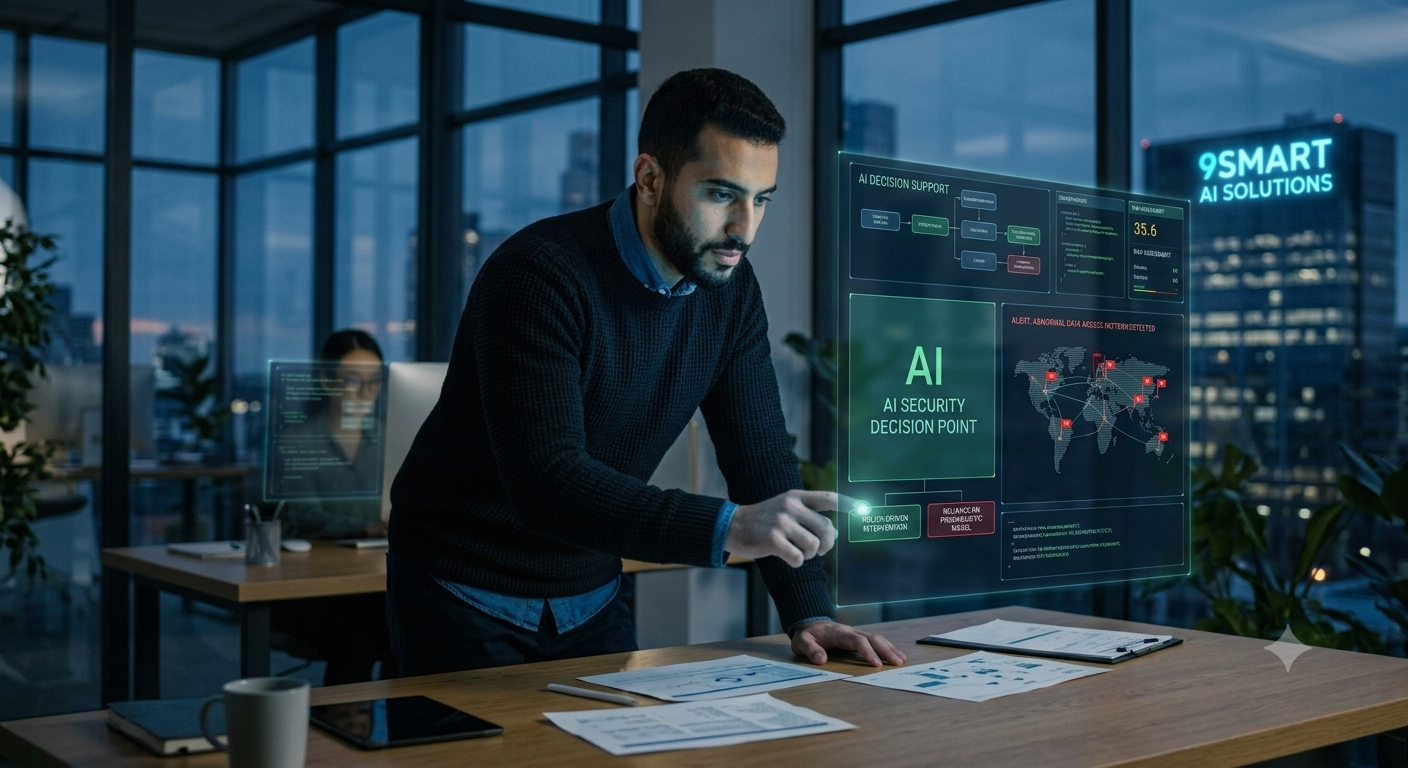
In today's fast-paced tech landscape, many believe that artificial intelligence is the ultimate hero for our security challenges. But have you ever stopped to wonder: if AI is smart enough to detect a vulnerability, can we truly trust it to decide when to shut down an entire system? The reality is that while AI can identify threats, it cannot own security decisions. AI is brilliant at predicting threats, but it lacks the accountability required to own the final security decision.
The Problem with Probabilistic Security
Most modern security tools rely on what we call "probabilistic security." They operate on likelihoods—telling you that a file is "probably" malicious or that a behavior is "likely" suspicious. While this approach is fantastic for triage and helping analysts sift through noisy data, it hits a wall when you need to make a definitive "allow" or "block" decision on executable code.
In a world where developers rely on automation and AI-generated components moving at machine speed, we no longer have the luxury of waiting for human judgment to catch up to every probabilistic score. We need more stability than a simple percentage-based guess.
The Necessity of Explainable Security
As software becomes more autonomous, our security decisions must be explainable, repeatable, and auditable. If your system blocks a critical software update, you need to be able to justify why. If the AI took that action based on complex, opaque variables, you can't defend that decision in a compliance review.
Security teams need to know:
- Why an artifact was blocked or allowed.
- Whether that same artifact would produce the same result tomorrow.
- How to defend that decision during an incident review.
Moving from Detection to Prevention: Zero Trust for Code
Instead of asking whether something is "likely" malicious, we should shift toward behavioral intent analysis. This is the heart of the "Zero Trust for Code" approach. We focus on what a piece of software is actually capable of doing—such as accessing sensitive data, modifying system states, or communicating externally.
By evaluating these behaviors before execution against defined policies, organizations can transition from reactive detection to proactive prevention. You aren't just flagging an alert after the damage is done; you are acting as a gatekeeper for execution itself.
FAQ: AI and Security Decisions
Q: Is AI ever the right choice for security enforcement?
A: AI is an exceptional tool for detection and data analysis, but it should function as an assistant rather than the final authority. Security enforcement requires policy-driven logic that AI currently struggles to maintain consistently.
Q: Why is 'Probabilistic Security' risky for businesses?
A: Probabilistic models provide likelihoods rather than certainties. Relying on them for blocking code can lead to false positives that stop legitimate business processes, or worse, false negatives that allow actual threats to pass.
Q: What is the biggest advantage of 'Zero Trust for Code'?
A: It shifts the focus from 'who' is sending the code to 'what' the code is capable of doing. This proactive approach prevents malicious activity before it executes in your environment.
Final Thoughts: The Human Element
The future of cybersecurity isn't about choosing between AI and deterministic controls; it’s about the synergy between them. AI is an incredible tool for processing large datasets and accelerating investigations, but it shouldn't be the final authority on what runs in your production environment.
At the end of the day, security is a policy-driven discipline. AI can provide the insights, but the accountability for the decisions that keep your environment safe belongs to the humans behind the policy. Welcome to the era of intelligent, yet accountable, security.