Why Apple’s Quiet WWDC26 Was Actually a Stroke of Genius
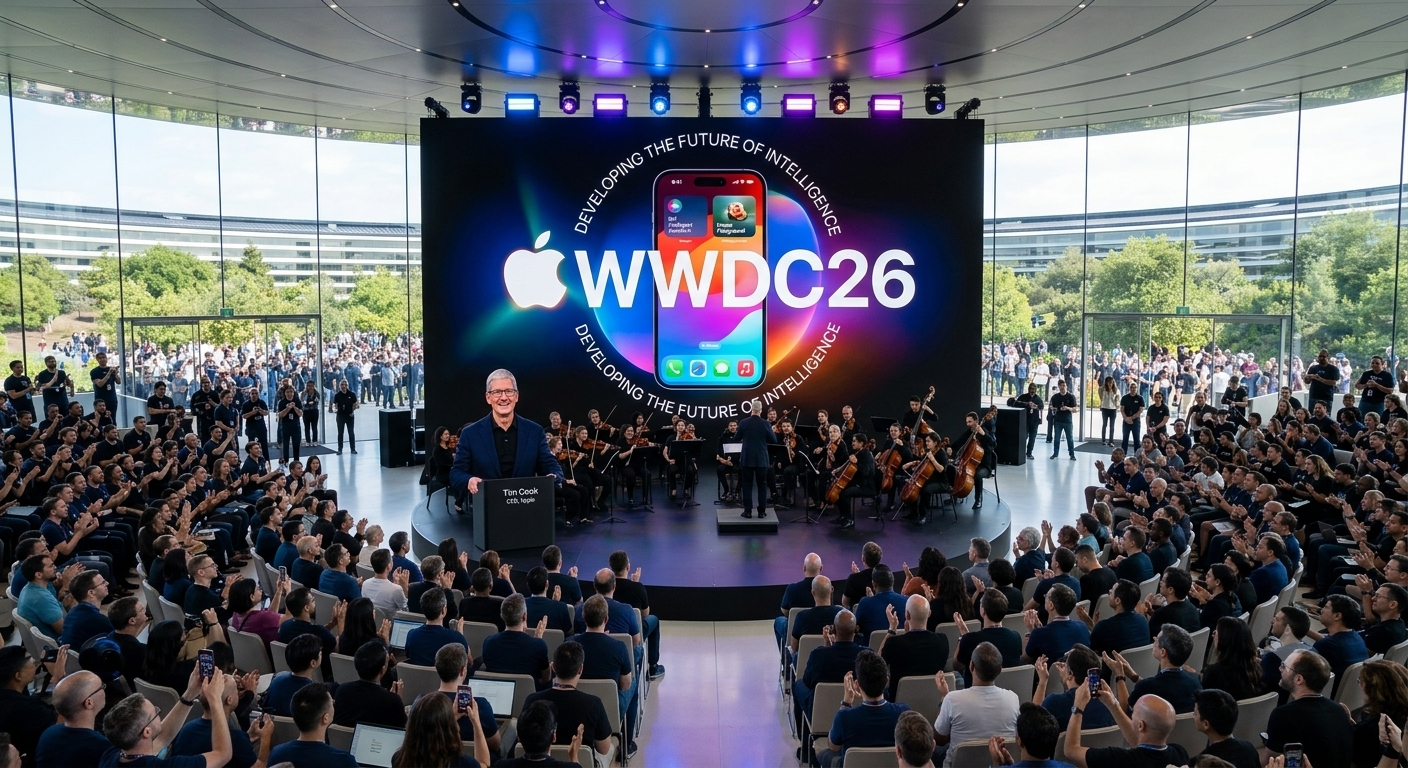
If you were waiting for Apple to drop a 'one more thing' moment that would leave the tech world breathless at WWDC26, you probably walked away feeling a little flat. Many asked, 'Why was Apple’s quiet WWDC26 a stroke of genius?' The reality is that there were no wild hardware reveals, no foldable iPhones, and certainly no 'Skynet' moments. But if you look past the lack of fireworks, you’ll realize that Apple wasn't aiming for a spectacle. They were playing a much smarter, quieter game focused on long-term AI integration.
The Anti-Chatbot Strategy
The rest of the tech industry seems obsessed with convincing us to live inside a chatbot. They want us to treat AI like a destination—a place you go to type prompts and wait for magic.
Apple is taking the exact opposite approach. At this year's developer conference, they made it clear that their vision for AI isn’t a separate app; it’s an invisible layer of intelligence folded into the tools you already use. Whether it’s Siri, Photos, Safari, or Mail, Apple is weaving AI into the fabric of your routine. It’s not about changing how you work; it’s about making the work you’re already doing feel a little lighter.
Siri: Finally Getting the Reset It Needs
Let’s be honest: Siri has been coasting for a while. The new Siri AI feels like the overdue upgrade we’ve been waiting for. By prioritizing personal context and screen awareness, Apple is aiming for a version of Siri that actually knows what you're looking at and can pull relevant information from your emails or messages to help you finish a task. Most AI interactions today feel like one-off conversations; Apple wants this intelligence to follow you across your Mac, iPhone, and even your Vision Pro.
Practicality Over Theater
Perhaps the most 'mainstream' win of the event was Visual Intelligence. The premise is simple: point your camera at something, ask a question, and get an answer. It’s just plain helpful. This philosophy echoed through everything they announced. As my colleague Brett Faulk noted, these updates feel 'tangible' because they solve actual problems rather than promising a robotic future.
Trust: The Secret Sauce
Beyond the flashy AI tools, I was genuinely impressed by the updates to parental controls. In a world where parents are constantly fighting a losing battle against screens, Apple’s commitment to making these controls more human-friendly is a big deal. It ties perfectly into Apple's broader reputation for privacy. By centering trust in their AI narrative, Apple is playing to its greatest strength.
FAQ: Apple's AI Strategy at WWDC26
Q: Why did Apple focus on 'invisible' AI instead of chatbots?
A: Apple believes AI should be an enhancement to existing workflows rather than a separate destination. This strategy prevents friction and makes the technology feel like a natural extension of the OS.
Q: Is the new Siri capable of cross-device tasks?
A: Yes, Apple’s new approach aims for context-aware intelligence that follows the user across iPhone, Mac, and Vision Pro to maintain productivity.
Q: How does Apple handle data privacy with these new AI features?
A: Apple prioritizes 'on-device' processing and clear transparency, maintaining its long-standing commitment to user privacy, which distinguishes it from competitors who rely heavily on cloud-based data scraping.
The Bottom Line
Did WWDC26 lack the 'wow' factor? Absolutely. But it wasn't supposed to be a fireworks show. Apple used this event to lay a foundation. They are trying to prove that AI can be helpful without being creepy or intrusive. We still have to see if the speed and reliability hold up in the wild, but if Apple manages to pull this off, the quiet impact of this event might eventually matter much more than a loud, flashy announcement ever could.