The Memory Chip Shortage: How AI Data Centers Are Impacting Consumers in 2026
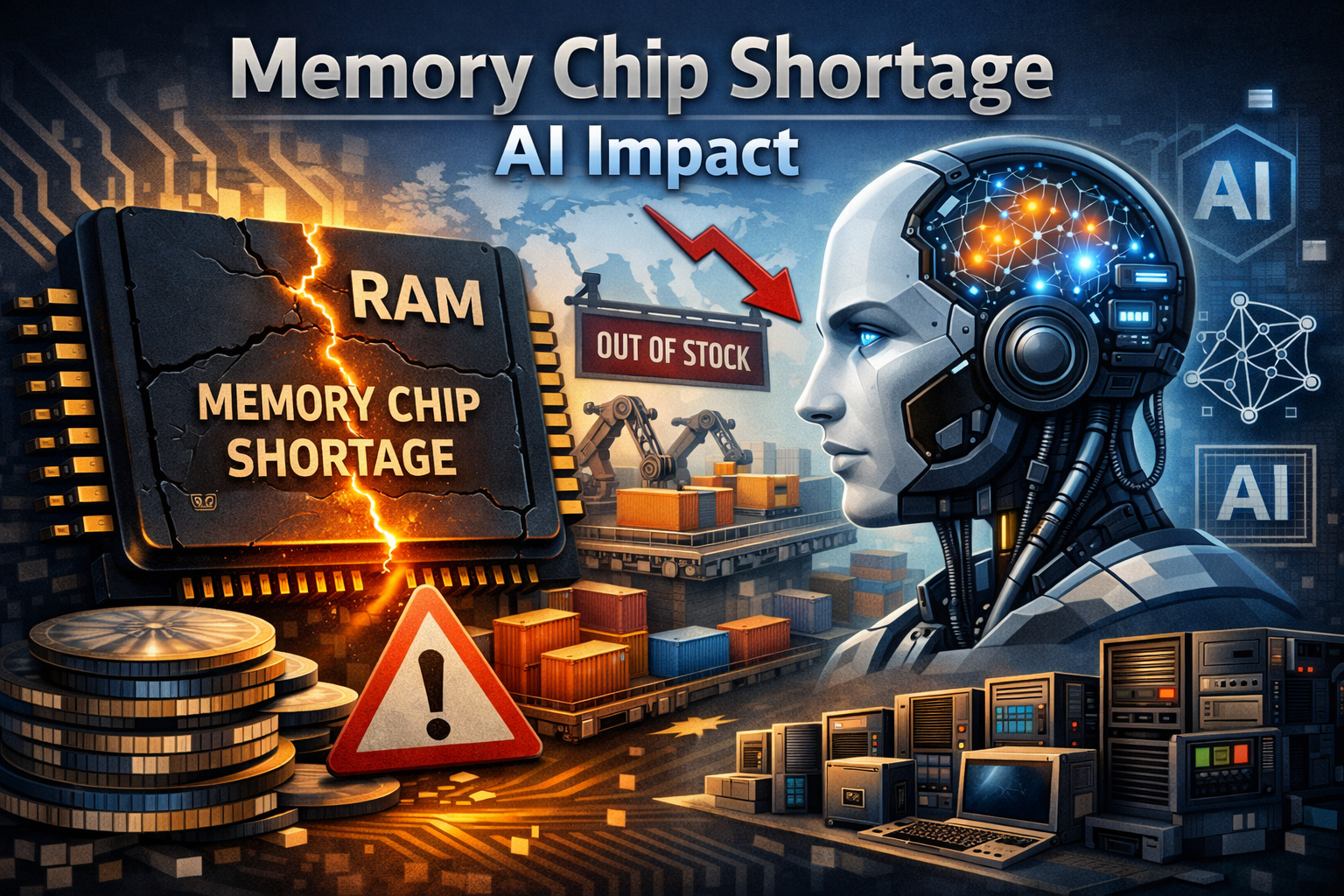
In 2026, the tech industry faces a significant memory chip shortage driven by the insatiable demand of AI servers. Many consumers are asking, 'How does the AI data center boom affect my device costs?' The reality is that as major manufacturers like Samsung, SK Hynix, and Micron prioritize high-bandwidth memory (HBM) for artificial intelligence, the supply for consumer-grade DRAM and NAND is dwindling, leading to increased prices across the gadget market.
Why Data Centers Are Draining Supply
AI servers require 10 to 20 times more memory than conventional servers. Because HBM and consumer RAM are produced using the same manufacturing wafers, every chip allocated to an AI data center is a chip that never reaches a laptop or smartphone. According to market research from IDC, data centers are expected to absorb 70% of global memory production in 2026, a massive increase from the 20-30% range seen in 2022.
Impact on Your Devices
This shortage means that managing your device's internal storage is more critical than ever. For users looking to optimize their current hardware to offset these costs, check out our guide on Android Storage Optimization to manage your space efficiently during these supply chain constraints.
Potential Paths to Relief
- Capacity Expansion: Manufacturers are investing in new facilities, though supply chains in the semiconductor industry do not 'turn on a dime' and new capacity takes years to scale.
- Efficiency & Innovation: Long-term solutions involve making AI systems more efficient through better algorithms, data compression, and specialized models rather than just building more data centers.
- Recover-First Paradigm: An overlooked source of relief is the recovery and recirculation of memory and components from retired IT assets instead of shredding them.
FAQ: The Memory Chip Shortage
Q: Why are consumer gadget prices rising in 2026?
A: Because high-bandwidth memory (HBM) for AI servers competes for the same production wafers as consumer-grade RAM, creating supply scarcity and driving up retail prices.
Q: How long will this chip shortage last?
A: Experts predict it could take one to two years for the memory market to fully stabilize as new manufacturing facilities scale their operations.
Q: Is there an immediate solution for consumers?
A: While there is no immediate fix, consumers can extend their hardware lifespan by optimizing internal storage and opting for device maintenance rather than frequent upgrades.
Conclusion
While community opposition to data center expansion regarding power and water usage is rising, it will not provide immediate relief for the chip shortage. The industry must focus on balancing innovation with sustainable manufacturing to protect consumer accessibility to essential technology.