Top 5 Best Laptops for Programmers in 2026: Performance & Productivity Guide
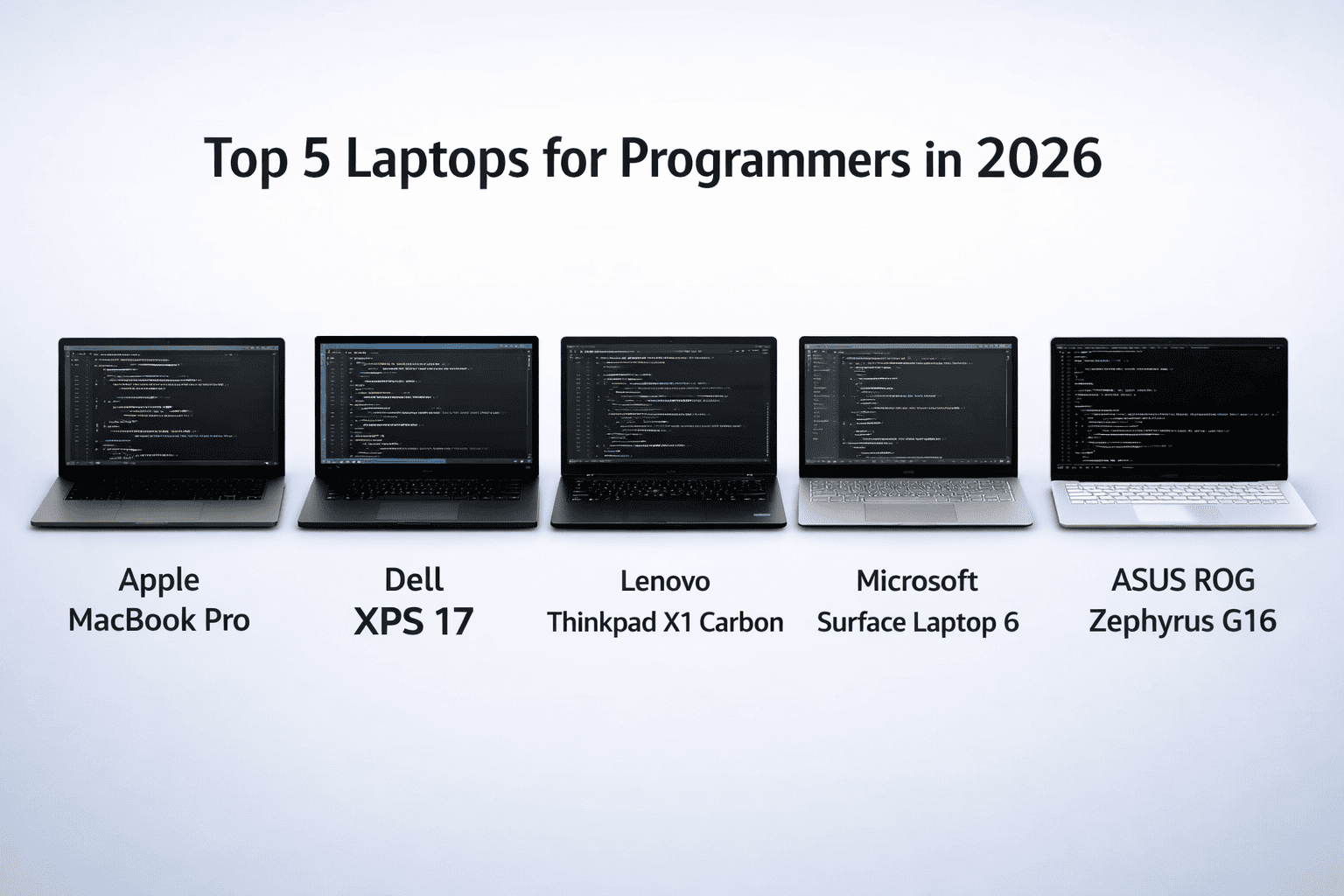
The 'coffee shop' scenario is a classic for a reason: finding the perfect machine that doesn't overheat during a complex build is a dream for every developer. Many professionals often ask, 'What are the top 5 best laptops for programmers in 2026?' Hardware limitations have historically bottlenecked creativity, but 2026 is truly the year of the 'powerhouse portable'. Choosing the right laptop isn't just about specs; it's about finding a companion that gets out of your way so you can reach your flow state faster.
The Developer's Hardware Manifesto: What Actually Matters?
In 2026, RAM has become the 'new oil' for your development environment. Whether you are running local AI models, multiple Docker containers, or large-scale IDEs, your hardware needs to handle high concurrency without stuttering. Screen real estate and battery life are equally critical when you're deep in a debugging session at 3 AM.
Top 5 Laptops for Developers in 2026
- MacBook Pro 16-inch (M5 Max): The Unrivaled Beast: A top choice for engineers who rely on Apple Silicon for heavy compiling and complex local AI models.
- Dell XPS 16 (9640): The Windows Powerhouse: Balances enterprise-grade reliability with a stunning OLED display for marathon coding sessions.
- MacBook Air 15-inch (M4): The Efficiency King: The ultimate choice for web developers and digital nomads who prioritize weight and battery life.
- Lenovo ThinkPad P16s Gen 3: The Keyboard Perfectionist: Designed for those who prioritize typing feel and require extensive port connectivity for any conference room.
- ASUS Zenbook S 14: The Stylish Innovator: Advanced cooling and unique materials change the game for developers working on the go.
FAQ: Programming Laptops in 2026
Q: How much RAM do I really need for programming in 2026?
A: For modern development workflows involving containers and local AI, 32GB of RAM is the new baseline, while 64GB is recommended for heavy virtualization.
Q: Is ARM (Apple Silicon/Snapdragon) better than x86 for devs?
A: ARM-based chips offer superior battery efficiency and performance-per-watt, making them ideal for mobile development, while x86 remains relevant for specialized legacy or high-compute enterprise stacks.
Q: Should I prioritize CPU clock speed or core count?
A: For most programming tasks (compiling, running code), higher core counts and cache sizes are generally more beneficial than raw single-core clock speeds.
Final Verdict: Making the Investment
Investing in the right machine is a professional imperative. Whether you need the brute force of an M5 Max or the portability of an Air, ensure your choice aligns with your specific tech stack. Remember: poor ergonomics or slow load times can break your rhythm—choose a device that sustains your momentum.